The Nine Tarot · Major Arcana
The Hanged Man
More effort is not always the next useful move. The Hanged Man makes room to reconsider an approach, and to ask whether waiting still has a purpose.
- Perspective
- Pause
- Release
Upright and reversed meanings, with space for your own judgement.
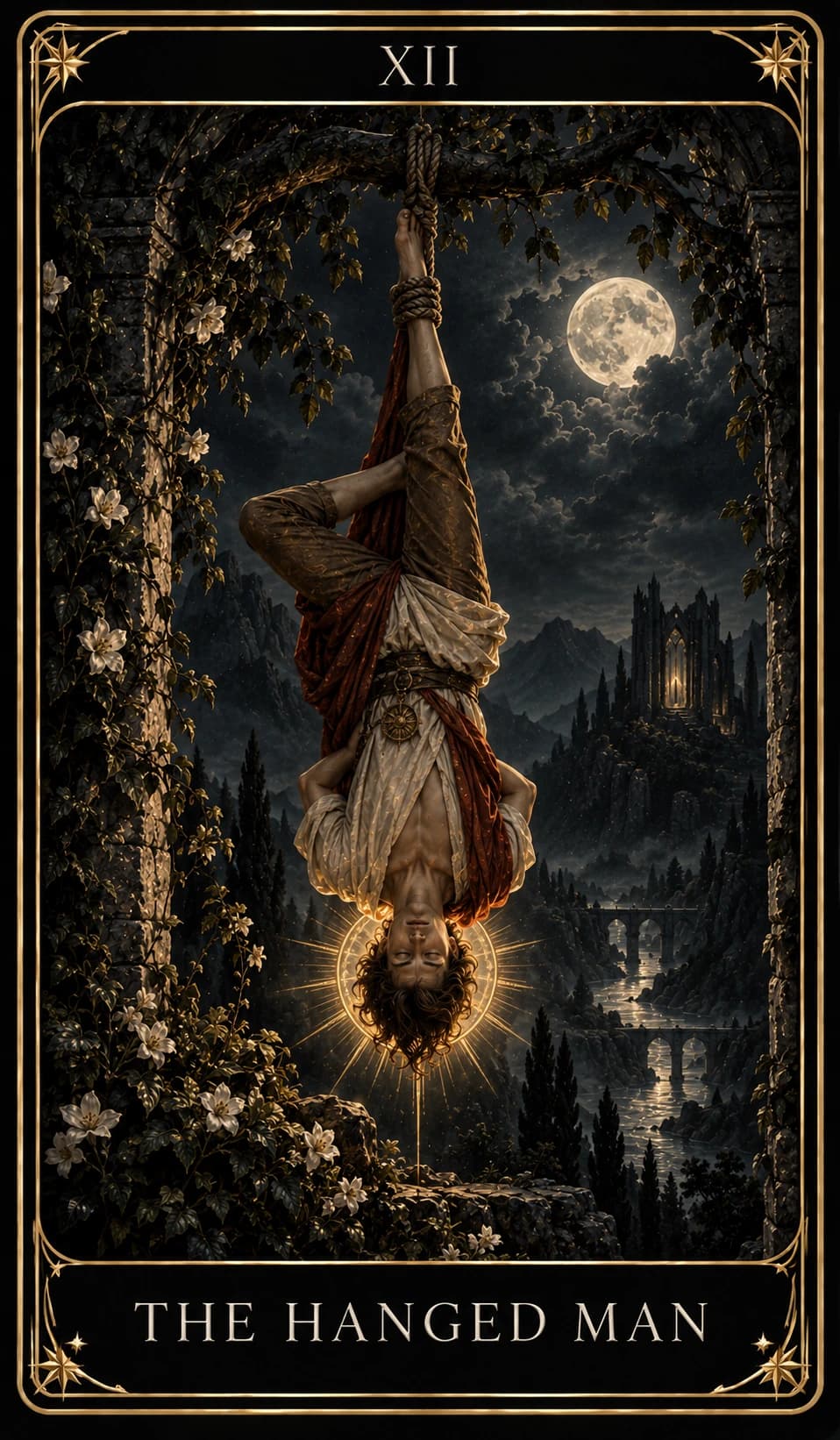
What does The Hanged Man mean?
The Hanged Man concerns a pause in the usual response. You may have tried harder, explained more or returned to the same argument without learning anything new. Temporarily setting that approach aside can reveal an assumption that effort has kept hidden.
A pause in the Nine Tarot can be active. You might gather missing information, look at the problem from another position or let go of the need to prove that the first method was right. The purpose is a different view, rather than continued discomfort for its own sake.
The Hanged Man upright
Upright, stop treating the immediate response as the only possible one. A stalled task may need a clearer brief rather than another hour. A disagreement may need you to understand the other account before rehearsing your own once more.
Define what the pause allows you to do. Perhaps you need one answer, a little distance or time to examine an assumption. That gives waiting a relationship with the eventual choice. Releasing an approach does not require releasing your needs; you can change the method while retaining what matters.
The Hanged Man reversed
Reversed, waiting may have lost its reason. An arrangement can remain suspended because choosing would be uncomfortable, even when the available information is no longer changing. A review point helps distinguish necessary patience from indefinite postponement.
The card can also concern sacrifice. Giving more time or accepting another inconvenience may feel easier than asking for a different agreement. Examine whether the sacrifice makes something worthwhile possible, or simply keeps the decision at a distance. Discomfort is not a price you must keep paying before you are allowed to move.
The Hanged Man in love and relationships
A different perspective can make a familiar disagreement less repetitive. Try describing the situation without immediately defending your established position. Understanding another account does not mean accepting every part of it.
Reversed, consider whether continued accommodation has replaced a necessary request for change. Waiting for someone to notice what you have given up can leave the actual issue unspoken. A pause is more useful when each person understands its purpose and what would make the next conversation possible.
The Hanged Man in work and everyday choices
A stalled task can expose the limits of a method. If more effort produces little, revisit the assumption that defines the task: what is the result supposed to do, and is the present approach capable of doing it?
With the card reversed, work may remain indefinitely suspended without a clear decision about its future. Define what needs to happen before it resumes and when that will be reviewed. An unfinished commitment can claim attention even while nothing is being done. Naming its status gives you a more accurate view of what remains open.
A pause in the context of a reading
In a support position, the pause may offer perspective. In a difficulty position, it may concern delay or self-sacrifice. The Chariot asks about movement; The Hermit asks about quiet attention. Their themes help examine whether stepping back is preparing a response or keeping it permanently out of reach.
Does The Hanged Man mean giving up?
No. The card asks you to reconsider an approach, not automatically abandon a purpose. It also does not make sacrifice inherently valuable. A meaningful pause has a reason and a relationship with what comes next. That reason can change when new information or circumstances arrive.
These meanings offer a reflective lens. They cannot establish hidden thoughts, guarantee an outcome or replace professional advice.