The Nine Tarot · Major Arcana
The Fool
A beginning does not need a complete map. The Fool asks how you meet the unfamiliar, and what would make a first step worth taking.
- Openness
- Beginning
- Trust
Upright and reversed meanings, with space for your own judgement.
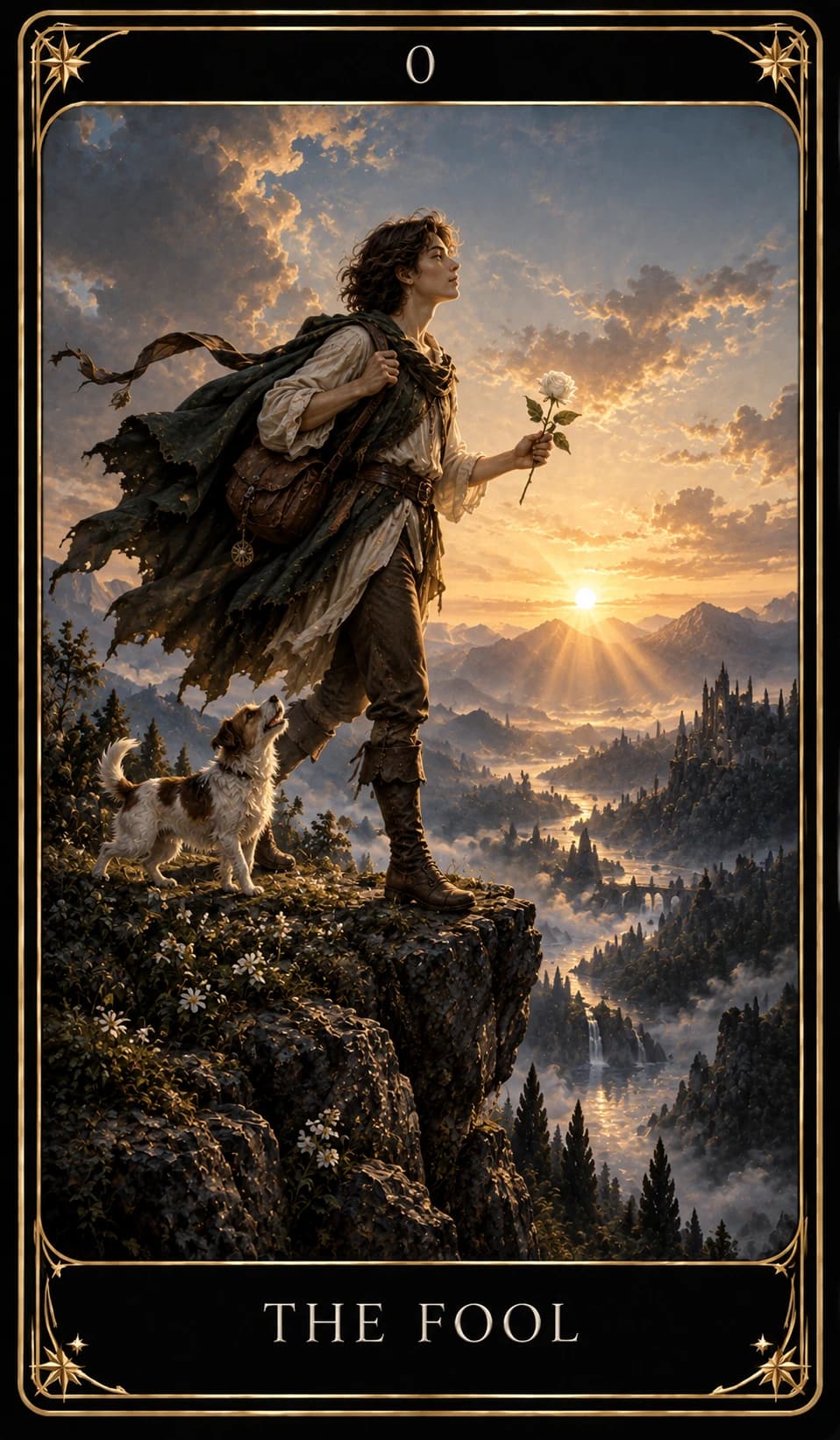
What does The Fool mean?
The Fool concerns the moment before experience has settled into a rule. You are interested in something, but you cannot yet know what being part of it will feel like. There is a particular freedom here: you have not learned every reason to dismiss the possibility. There is also a practical question. What can you try without pretending that enthusiasm gives you all the information you need?
In Path of the Nine, this card is less an instruction to leap than an invitation to become a beginner. That could mean asking a basic question, joining a class, making an unfinished draft or approaching a familiar conversation differently. The important movement is from imagining an experience to learning something through it. You still get to choose the scale and pace.
The Fool upright
Upright, The Fool makes room for curiosity without requiring you to be impressive. You may have made competence a condition of joining in: you will try once you know enough, speak once you have the perfect wording, begin once nobody can question the decision. Sometimes that preparation is useful. Sometimes it keeps the experience permanently just out of reach.
A useful response is a manageable experiment. Attend once before making a long commitment. Ask one person rather than announcing a new direction to everyone. Give an idea an hour and see what happens. Openness works best when you can notice the result, including a result you did not hope for. Trust here means allowing experience to teach you, rather than assuming everything will work out.
The Fool reversed
Reversed, The Fool draws attention to your approach to uncertainty. At one extreme, every possible consequence fills the threshold until beginning feels impossible. At the other, the excitement of departure makes it tempting to skip an ordinary check. Hesitation and haste can look very different while sharing the same wish to escape an uncomfortable unknown.
This orientation can also describe private courage. A beginning may need quiet preparation before it needs an audience. Keeping an experiment small is not necessarily a failure of confidence. Ask whether your pause is helping you learn something, or simply postponing the moment when you cannot be certain. Equally, ask whether a sudden commitment reflects a real interest or the pressure to prove that you can change. Neither answer requires a dramatic leap.
The Fool in love and relationships
The Fool can invite fresh attention to someone you already know. Ask a question whose answer you have not prepared for. Notice whether an old disappointment is being carried into a different conversation. In a new connection, curiosity can remain curiosity; it need not become a promise about where the relationship will lead.
Reversed, the emphasis may be on pace. Excitement can rush an agreement, while fear can turn every invitation into a test. An ordinary discussion about what each person wants gives you more to work with than guessing. This card cannot tell you that someone is your destined partner, reveal their private feelings or establish that a relationship is safe. What people say and do remains relevant.
The Fool in work and everyday choices
A new task can be useful precisely because it makes your current assumptions visible. You might discover that you enjoy the work, that you need help, or that the idea was more attractive from a distance. None of those discoveries makes the trial wasted. The card asks you to distinguish learning from the demand to succeed immediately.
If you feel drawn towards a larger change, bring the question back to what you can investigate. What would a short conversation, sample task or first draft reveal? With The Fool reversed, check whether another new idea is interrupting work that needs finishing. You can make room for novelty while recognising existing commitments. The card offers perspective on a choice; it cannot predict an offer, promotion or commercial result.
How the reading changes its meaning
A card in a position describing what brought you here serves a different purpose from one offering something to consider next. The Fool might describe an earlier beginning, a present willingness to explore or a question about how to proceed. The surrounding cards may emphasise resources, values or the need for more reflection. Its meaning is not a fixed instruction repeated in every spread.
Try naming the uncertainty before deciding what the card means for you. You might not know whether you will enjoy an activity, whether another person will agree or whether a plan is workable. Those are different unknowns. A useful interpretation helps you identify the next piece of experience or information, rather than replacing it with reassurance.
Does The Fool mean being reckless?
No. The name can make the card sound like a judgement on intelligence, but its subject is the vulnerability of beginning without experience. Upright is not a command to ignore risk, and reversed is not proof that you have made a foolish choice. Both orientations leave room for curiosity and careful attention.
The difference lies in how that beginning is being approached. Upright often opens the possibility of learning by trying. Reversed asks whether fear, hurry or a private process is shaping the pace. Keep what is useful and leave aside what does not fit your situation.
These meanings offer a reflective lens. They cannot establish hidden thoughts, guarantee an outcome or replace professional advice.