The Nine Tarot · Major Arcana
The Tower
When experience no longer fits an explanation, the explanation needs attention. The Tower asks what remains sound and what can no longer be defended unchanged.
- Disruption
- Exposure
- Reassessment
Upright and reversed meanings, with space for your own judgement.
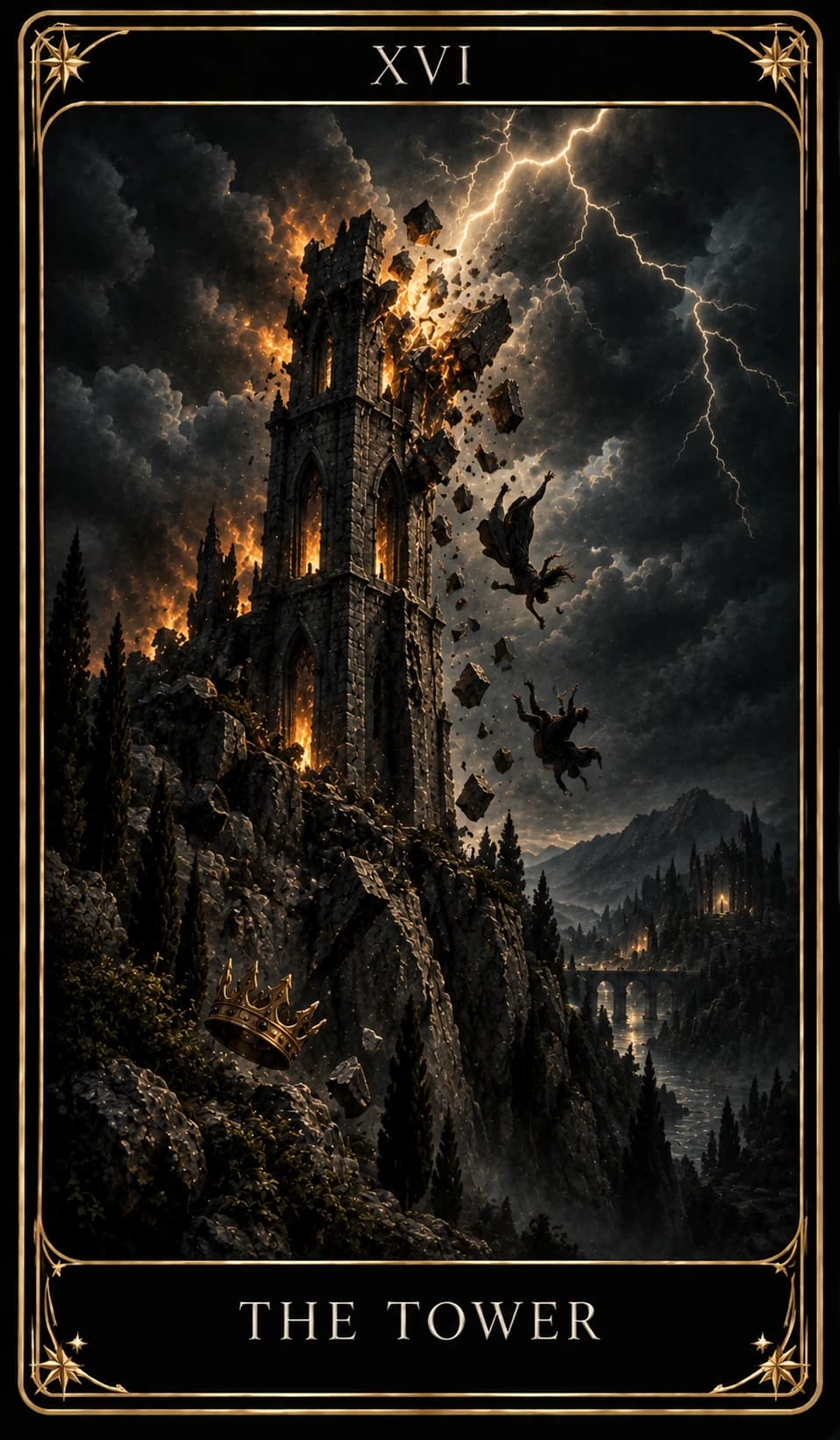
What does The Tower mean?
The Tower concerns a structure that cannot hold what has become visible. A plan may rely on an assumption that experience contradicts. An arrangement may look dependable until a practical difficulty reveals how much was left unspoken. The card asks for reassessment, not anticipation of disaster.
Losing an explanation can be disorienting. It does not make every part of your life false or every earlier choice foolish. In the Nine Tarot, the useful task is distinguishing what needs correction from what still supports you. One reliable fact and one practical source of support can offer a better starting point than a sweeping conclusion.
The Tower upright
Upright, acknowledge the contradiction before building another plan around the same premise. If a deadline has repeatedly proved unrealistic, treating the next attempt as exceptional may preserve the appearance of certainty while leaving the problem untouched.
A correction can be proportionate. You might change the agreement, revise the method or admit that something is still unknown. Begin with what you can establish. The dramatic name and artwork do not make dramatic action necessary; they bring attention to the importance of an assumption that has stopped holding up.
The Tower reversed
Reversed, you may be noticing strain before it becomes public, making a quiet correction or finding your footing after a disruption. Change can be deliberate and gradual. An arrangement does not have to collapse before a weakness deserves attention.
Look at what postponement preserves. It may protect useful continuity, or it may protect an explanation that no longer fits. Equally, confidence can take time to return after you recognise what was unsound. Preserve the parts that remain dependable while adjusting what needs work. Unease alone is not evidence that something terrible is approaching.
The Tower in love and relationships
An assumption about a connection may need discussion when experience contradicts it. Perhaps you believed an agreement was shared, but each person understood it differently. The useful conversation concerns that difference rather than deciding immediately what it means for the whole relationship.
Reversed, a recurring argument may be carrying an issue that has never been addressed directly. Name the specific arrangement beneath it. The card cannot forecast a breakup, reveal a betrayal or prove another person's intentions. Respond to what has actually happened, rather than to the intensity of the symbol.
The Tower in work and everyday choices
An invested plan can still need correction. Time already spent does not establish that the method is workable. Separate useful work from the assumption that needs revising so you can retain more of what matters.
With the card reversed, a gradual redesign may offer more than another defence of the old process. Identify which part fails in practice and what would make it dependable. This is a way to review a plan or commitment, not a forecast of job loss, financial loss or any other external event.
Reassessment in the context of a reading
The Tower may describe something already recognised or an assumption worth examining. Justice helps distinguish evidence from interpretation; The Star makes room for hope after a demanding passage. The spread position and question help establish whether the focus is correction, support or making sense of an earlier change.
Should I be afraid of The Tower?
The card is not advance notice of catastrophe. Read its intensity as emphasis on a question about foundations. What part of the account still fits, and what needs revision? Neither orientation tells you that danger is imminent or requires you to disrupt a stable arrangement simply because the card appeared.
These meanings offer a reflective lens. They cannot establish hidden thoughts, guarantee an outcome or replace professional advice.